What Are the 4 Different Types of Uses for Robots in the Industry?
What Are the 4 Different Types of Uses for Robots in the Industry?
Here are 4 different types of uses for robots in the industry;
1. Automated System for the Exchange of Pharmaceutical Containers
The goal of these self-driving robots in the industry is to move containers that are used in the process of making pharmaceuticals. It can maneuver through confined places in production facilities. For the purpose of transportation, the robot can autonomously link itself to big containers (or cases filled with items) weighing up to 200 kilograms (440 pounds).
The robot only has to be recharged once per day, it can be flexibly programmed and adapted to fit the manufacturing process, and it is safe and simple to use on production lines that are already in place. It has been claimed that the addition of three robots to manufacturing lines at a pharmaceutical firm has resulted in an increase in output that is thirty percent higher.
2. High-throughput screening using a cylindrical robot
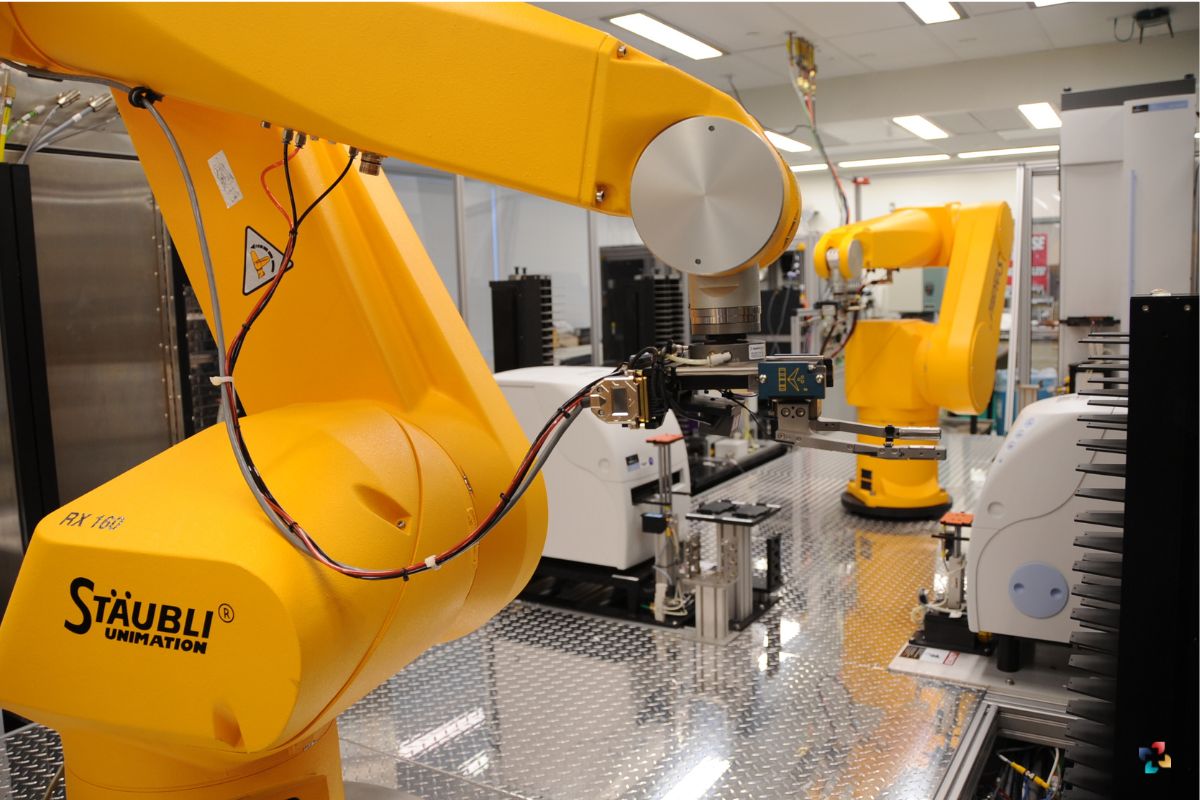
ST Robotics has introduced a new 4-axis cylindrical robot for DNA screening, which may be used in a variety of fields and applications, including forensic science, medication development, bacterial resistance, and toxicity. The R19 is an entirely new design that may either be provided in the form of precision 4-axis robots in the industry or the more straightforward form of a basic 2-axis plate mover.
It is often installed on a track that is anywhere from one to five meters long and is surrounded by a variety of scientific equipment. Samples are transferred from one instrument to another by the robot through a predetermined set of instructions provided by the user. In the laboratory setting, advanced drives provide motion that is both quick and smooth, while also keeping the operation very quiet.
The new R19 is a completely dependable workhorse that has been tested to the ISO 9000 quality assurance standard, just like all of Sands Technology’s other robots in the industry. The KUKA KR 1000 Titan is the most recent product release from the firm, and due to its capacity to lift very huge loads, it has been recognized by the Guinness Book of World Records.
The KR 1000 Titan is the first industrial robot in the world to be able to hoist a burden of one thousand kilograms and has a reach of four thousand millimeters. It will be responsible for manipulating a Chrysler Jeep body. Workpieces that are heavy, huge, or bulky are no match for the Titan’s impressive capabilities. The heavyweight champion was designed with industries like construction materials, automotive, and foundry businesses in mind when it was created.
3. A Ceiling-Mounted Robot That Requires No Floor Space
The s800 series Cobra robot from Adept Technology now comes in ceiling-mounted configuration robots in the industry. The inverted robot is capable of high-speed packing and assembly, and it also has a larger reach. Additionally, it leaves behind a far cleaner working environment. The new robot has numerous benefits over its predecessor, which was a floor-mounted unit that customarily took up a position next to either the packing line or the conveyor belt.
The reach of the Cobra s800 Inverted Robot is 800 millimeters, which is the same as the reach of the earlier model that was floor-mounted. However, since this robot is positioned on the ceiling above the conveyor, its reach is essentially doubled. Additionally, the machinery may be equipped with a vision system consisting of as many as four cameras.
This system identifies the location of products on the conveyor belt and transmits that information to the robot, allowing the latter to accurately pick up and orient the product in preparation for assembly or packaging robots in the industry.
4. Operations using Robotic Devices in the Laboratory and Packaging
Instead of doing monotonous duties that might lead to boredom and errors, human abilities can now be focussed on the selection and submission of samples, as well as the inspection of the data that are generated as a consequence of those samples. It goes without saying that improved data and lower expenses are the outcomes that this automation should provide.
New experimental techniques are removing human tedium and inaccuracy in the washing and transferring processes thanks to the use of laboratory robots in the industry. This comprises activities in the examination of radioactive, fluorescent, and luminous substances.
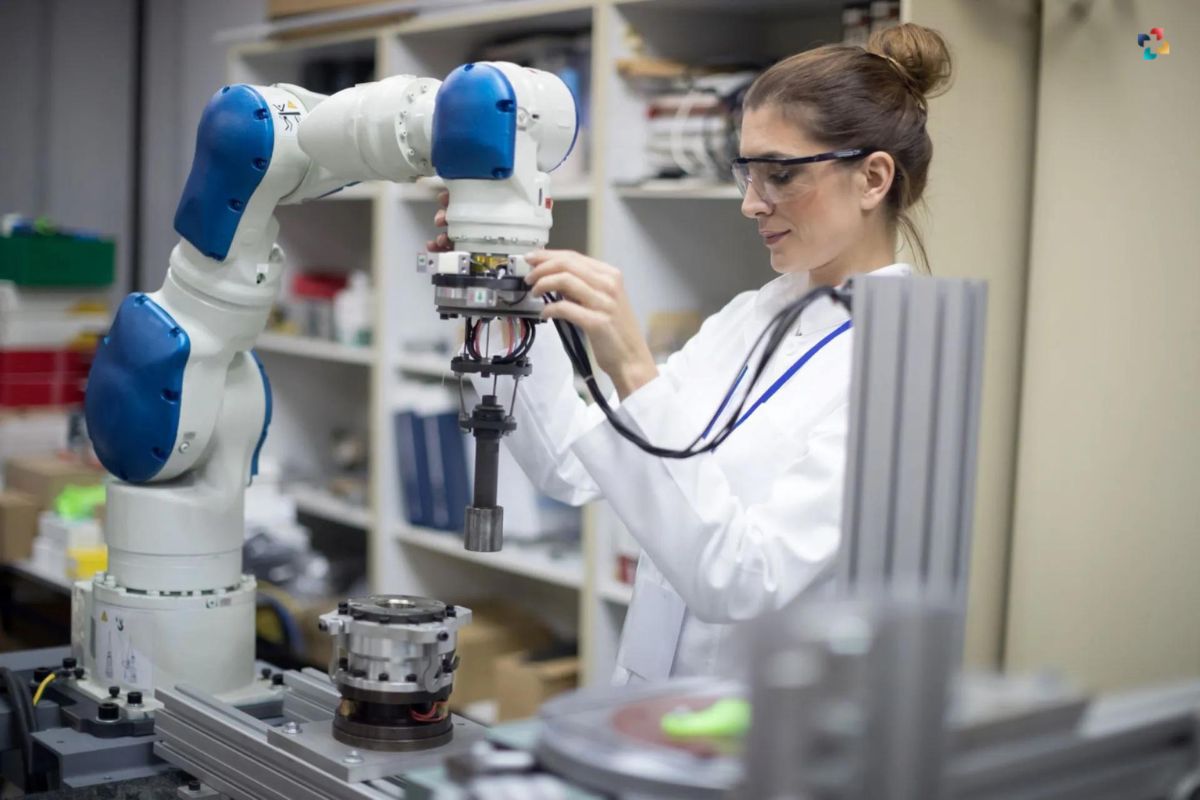
The use of laboratory robots is becoming more common in the pharmaceutical industry as a means of helping to satisfy the demands of boosting production, lowering the amount of time required for drug development, and cutting costs.
Cartesian robots in the industry, have three axes that are perpendicular to one another, cylindrical robots, which have parallel action arms that rotate around a central point, and anthropomorphic robots are the most prevalent geometries for laboratory robots (multijointed, human-like configuration).
Automation adds both speed and repeatability to operations in the pharmaceutical industry, which is beneficial to packaging procedures as well as other activities. Particularly helpful in providing both flexibility and precision is robotics.
Robotics can operate more effectively than specialist machines in some packaging applications, such as loading cartons robots in the industry. One of these applications is packing. Packaging machinery used in the pharmaceutical industry is often manufactured according to the specifications of individual products, such as vials.


Comments
Post a Comment