10 Interesting Facts About the Heart: You May Not Know
10 Interesting Facts About the Heart: You May Not Know
By The Lifesciences Magazine
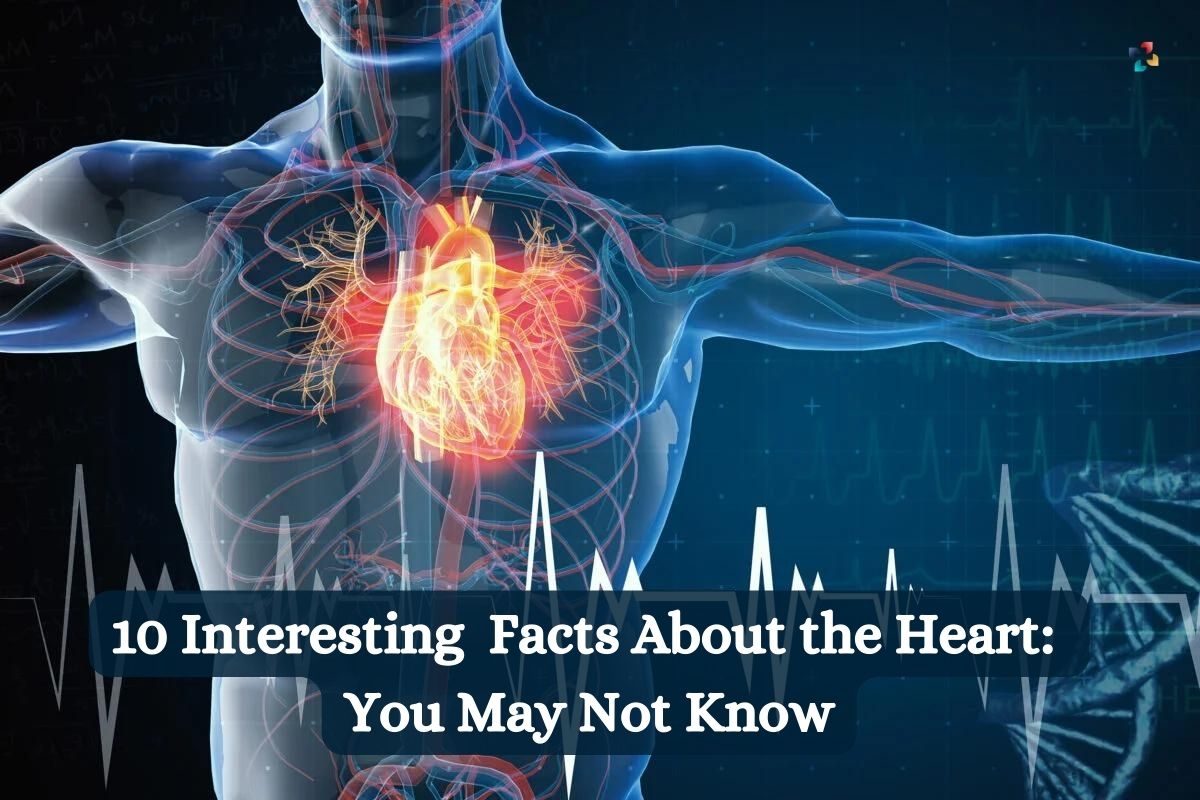 Here are 10 interesting facts about the heart you may not know;
1. You have a big heart.
You may have heard facts about the heart that your heart is about the size of your fist, and that’s true. With its lower tip pointing slightly to the left, your ticker takes up about as much space in your chest cavity as a hand would. Your left lung is smaller than your right lung because of how big and where your heart is.
When it comes to weight, men’s and women’s hearts are very different. The average weight of a woman’s heart is about 245 grams, or nine ounces, while the average weight of a man’s heart is about 300 grams, or 11 ounces. And having a “heavy heart,” either emotionally or physically, is not a good thing. Heart disease is usually the cause of a bigger heart.
2. Size matters (for speed).
In the facts about the heart in an animal kingdom, there is a general rule about how fast the heart beats: the bigger the heart, the slower it beats, and vice versa. So, the hearts of even the smallest animals beat very quickly. A hummingbird’s heart can beat up to 1,200 times per minute. On the other hand, a blue whale’s heart only beats eight to ten times per minute.

3. A healthy heart rate is within a certain range.
What’s normal for a person when hummingbird hearts beat fast and whale hearts move slowly? A healthy heart rate, according to the American Heart Association (AHA), is between 60 and 100 beats per minute. But if yours drops below this range, that doesn’t always mean there’s a problem. In facts about the heart, it might be a sign that you are healthy. Aerobic exercise makes your heart stronger and more efficient, so it can beat less often per minute.
4. The beat keeps going… and going.
If you add up those 60 to 100 beats per minute over your whole life, you’re sure to get a number that will shock you. Using an average of 80 bpm, if you live to be 80, you could reach more than three billion beats.
Oh, and if you’ve heard the strange theory that each person only gets a certain number of heartbeats in their lifetime, don’t believe it. Experts in medicine say that this is not true.
5. This is a big muscle.
In a way of facts about the heart, your heart is nothing more than a big muscle. It is made of cardiac muscle tissue, which, as its name suggests, can only be found in the heart. So, it needs exercise just like any other muscle in the body to stay toned. To do this, the AHA says to try to get 150 minutes of aerobic exercise per week at a moderate intensity.

6. There’s a sound that shows it’s the heart.
If you’ve ever used a stethoscope to listen to facts about the heart or someone else’s, you’ve heard the classic “lub-dub” sound of the heartbeat. Inside the heart, valves act like doors that open and close to send and receive blood from the rest of the circulatory system. The sound you hear is really just these “doors” shutting.
7. Gotta keep ’em separated.
You may have learned facts about the heart in biology class that the heart is made up of four chambers that are split into two sides. Interestingly, these two sides do different things. The lungs send oxygenated blood to the left side of the heart, which then pumps it to all parts of the body.
The right side then gets oxygen-poor blood from the body and pumps it to the lungs so it can get more oxygen. You could think of it like a duplex with a wall that separates the two units.
8. Your heart can benefit from eating certain foods.
When it comes to facts about the heart and what to eat to keep your heart healthy, one diet always comes out on top. The Mediterranean Diet, which is full of fruits, vegetables, whole grains, seafood, and olive oil, is the best heart-healthy diet for 2019, according to US News and World Report. Find out more about the diet and how this traditional way of eating helps keep your heart healthy here.
9. What is a heart attack?
What happens when someone has a heart attack? Not sure? Don’t feel bad. One survey found that 75% of Americans didn’t know much about the subject. A blockage in the arteries, which can be caused by smoking, eating poorly, or several other things, keeps oxygenated blood from getting to the heart.
When this happens, some facts about the heart muscle start to die. As a response, the body sends out alarm signals, which cause the signs and symptoms of a heart attack.
10. Stroke and heart attack are related.
It might seem like a stroke and a heart attack are two different kinds of medical emergencies. One hurts the brain, and the other hurts the heart, but the symptoms are very different facts about the heart. Why do doctors always put them in the same group?

To live and work, both the heart and the brain need oxygen. So, just like a heart attack happens when the heart doesn’t get enough oxygen-rich blood, a stroke happens when blood vessels in the brain get blocked and can’t bring oxygen to the brain.


Comments
Post a Comment